
Texture For the Common Man
Categories: Music Teaching Activities (Primary)

Three listening and composing activities for youngsters using Copland’s Fanfare for The Common Man as inspiration and focussing on timbre and texture
1. Listening to Timbre and Texture
- Listen to the track then draw and label all the instruments you can hear.
- How many of each instrument can you hear?
- The answers are: three trumpets, four horns, three trombones, one tuba, one set of timpani, a bass drum and a tam-tam.
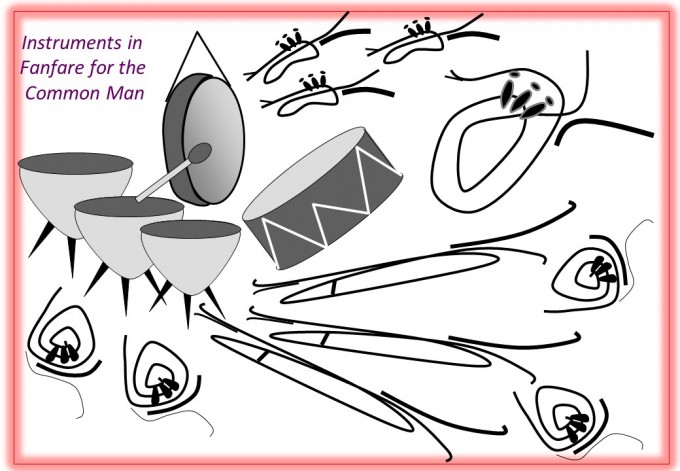
- Listen again and think about texture. This is how the instruments are put together. It starts with just percussion and silence. Then what happens?
- Here are some answers: Sometimes it’s just one sound, sometimes it’s a few and sometimes everyone plays together. There are even times when no-one plays at all and there is silence.
2. Texture Map
- Texture is also about the thickness of music. How many instruments are playing at any one time? Are they playing similar music or are they completely independent?
- Draw a texture map to show how the sounds are put together.
- There is already a map of Fanfare for the Common Man here to help you get started. Maybe you could follow my map for the first minute, then draw your own for the second or third minute. You may find the timings different in your recording – you could adapt them on the chart!
- Listen again to Copland’s music, this time following the texture map. What else does this map show?
- It shows the pitch and dynamics and how long the notes and phrases are.
3. Composing Using A Texture Map
- Use the texture map as a musical score and compose your own music following the map, and using the instruments you have available.
- Perhaps you could split into three groups and each group use a different part of the texture map, then join your pieces together.
- Compare your pieces of music to Aaron Copland’s. List the things that are the same and the things that are different.
- How could you improve your composition?
- By using dynamics, being and looking more confident, by not being afraid to take your time and exaggerate silences and dynamics…..
- Improve your composition and perform it to another class.
More Information:


No comments yet.